The Beginner’s Guide to Peptides: What They Are, Why They’re Trending, and How They Work
If you’ve spent any time looking into modern healthcare, skincare, or fitness trends lately, you’ve likely bumped into the word “peptides.” They are being hailed as everything from the ultimate anti-aging secret to the future of weight loss and muscle recovery.
But what exactly is a peptide? Are they just a marketing buzzword, or is there real science backing up the hype?
Let’s break down everything a beginner needs to know.
1. What is a Peptide? (The Simple Science)
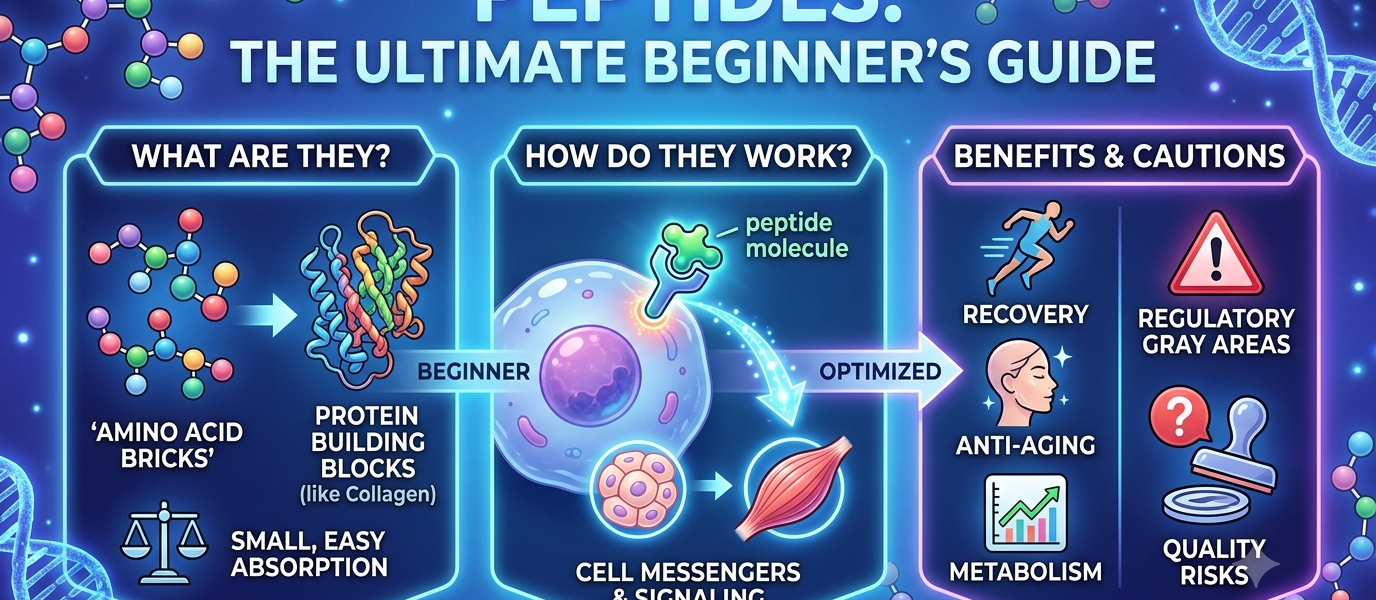
To understand peptides, think of your body as a massive construction site, and proteins as the primary building blocks.
Proteins (like collagen, keratin, or muscle tissue) are made up of tiny units called amino acids.
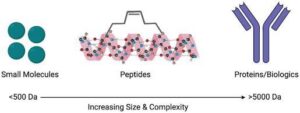
- If a single amino acid is a brick, a peptide is a short chain of those bricks (usually between 2 and 50 amino acids linked together).
- A protein is a massive, complex structure built from hundreds of those bricks.
Because peptides are much smaller than proteins, your body can absorb them far more easily.
The Body’s Cellular Messengers
In the body, peptides act like software code or text messages. They attach to receptors on the outside of your cells and deliver specific instructions. For example, a peptide might tell a skin cell, “Hey, we are running low on padding here—start producing more collagen!” or tell the brain, “Release a little more growth hormone to help repair that muscle damage.”
2. Why Are Peptides Suddenly So Popular?
Peptides aren’t actually new—scientists have been studying and using them for over a century (Insulin, discovered in the 1920s, is a peptide!). However, they have exploded in popularity recently for two major reasons:
- Advanced Bio-Engineering: Scientists can now precisely replicate and synthesize specific peptide chains in labs to target very exact functions in the body.
- The Shift Toward Longevity & Wellness: Modern consumers are shifting away from “reactive” medicine (fixing things when they break) and toward “proactive” biohacking (optimizing the body to age slower and heal faster).
3. Common Types of Peptides and Their Benefits
Because different chains of amino acids send different messages, the benefits depend entirely on which peptide you use. Here is a breakdown of the categories people use most:
Skincare & Anti-Aging
- How they help: As we age, natural collagen production drops. Topical peptides in creams and serums trick the skin into thinking it has been damaged, triggering it to manufacture fresh collagen and elastin.
- Popular Examples: Signal peptides (like Matrixyl) and neurotransmitter-inhibiting peptides (like Argireline, often called “topical Botox” because it subtly relaxes surface facial muscles).
Weight Loss & Metabolic Health
- How they help: This is currently the biggest driver of peptide popularity globally. Certain peptides mimic natural gut hormones that slow down digestion and signal to the brain that you are full.
- Popular Examples: GLP-1 receptor agonists (like Semaglutide and Tirzepatide). While heavily marketed under brand names as drugs, structurally, they are modified peptides.
Muscle Building & Tissue Repair
- How they help: Athletes and fitness enthusiasts use specific peptides that stimulate the pituitary gland to release natural human growth hormone (HGH). This accelerates fat loss, muscle growth, and joint repair without the severe side effects of raw synthetic steroids.
- Popular Examples: CJC-1295, Ipamorelin, and BPC-157 (often used for gut and tendon healing).
4. How Do People Use Peptides?
Peptides cannot simply all be taken as a standard daily pill. Because they are delicate chains of amino acids, your stomach acid will often digest and break them down before they ever reach your bloodstream.
Depending on the goal, they are administered in three primary ways: Delivery MethodBest Used ForWhy? Topical (Creams/Serums)Skincare, wrinkles, hair thicknessWorks directly on local tissue without needing to enter systemic circulation. Injections (Subcutaneous)Systemic health, weight loss, muscle recoveryBypasses the digestive tract completely for 100% absorption. Oral (Pills/Capsules)Gut health (like repairing stomach lining)Only specific, highly stable peptides (like BPC-157) survive stomach acid.
5. The Disadvantages, Risks, and Safety Concerns
While peptides are incredibly promising, they are not magic potions without risks. If you are building a webpage or considering using them, it is vital to know the downsides:
- The “Wild West” Online Market: Because many therapeutic peptides occupy a regulatory gray area, a massive online underground market has emerged. Buying “research chemicals” from unverified online vendors means risking contaminated, under-dosed, or completely fake products.
- Side Effects: Depending on the peptide, users can experience side effects ranging from mild water retention, increased hunger, and flushing, to more severe issues like altered blood sugar levels or extreme fatigue.
- Cost: Therapeutic peptide regimens supervised by an anti-aging medical clinic can be expensive, often running hundreds of dollars per month.
- Lack of Long-Term Human Data: While many peptides have phenomenal data in animal studies, large-scale, multi-decade human clinical trials are still lacking for some of the newer fitness and longevity compounds.
💡 The Golden Rule of Peptides
If you are using peptides for structural skincare, high-quality over-the-counter retail products are generally safe. However, if you are looking into systemic, injectable peptides for weight loss, healing, or longevity, always consult a licensed physician who specializes in endocrinology or cellular medicine rather than self-prescribing online.